
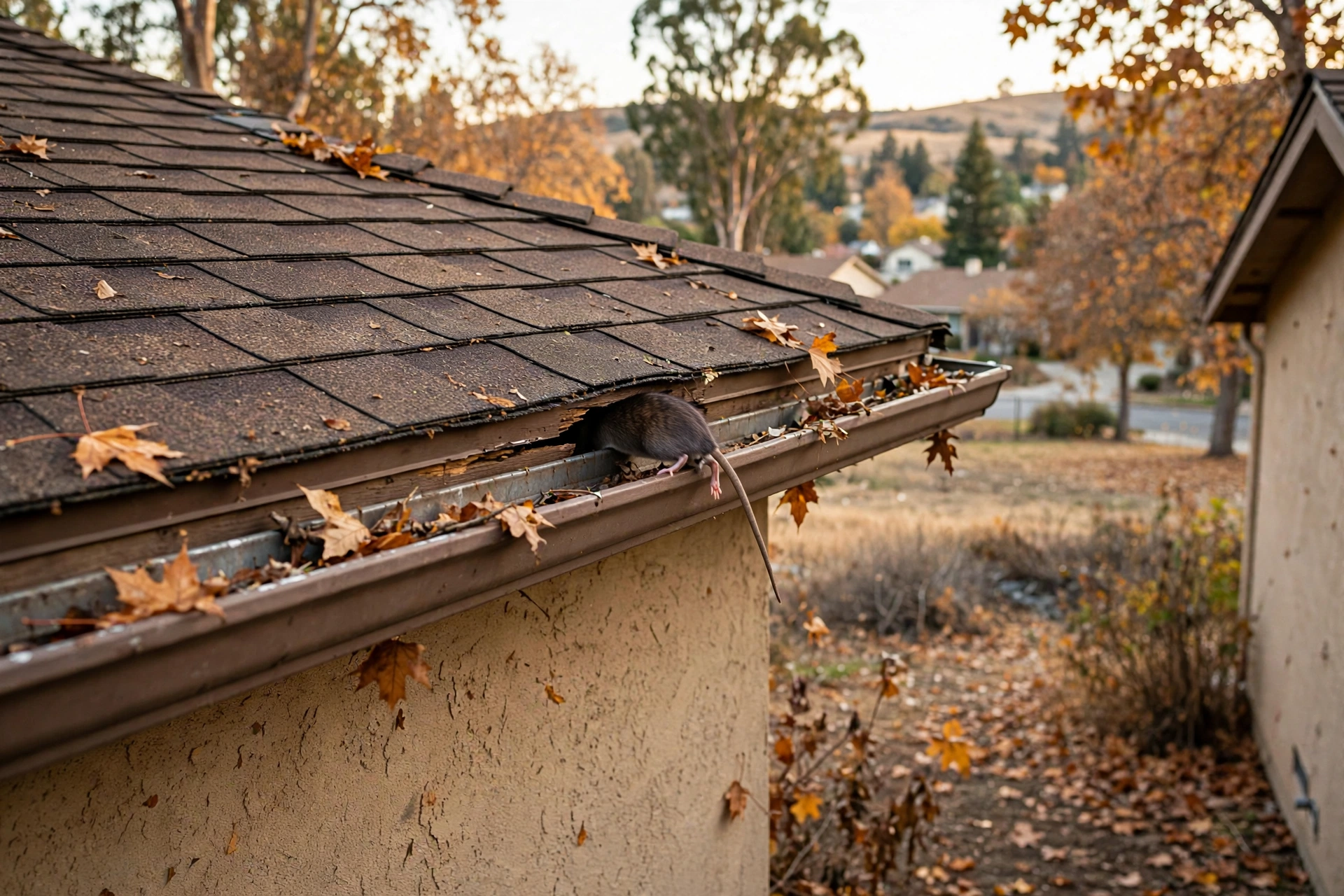
Every fall in the Sacramento area, the same thing happens. The nights cool down, the first rains arrive, and rodents that spent the summer perfectly happy outside start looking for a better address: yours.
It’s not random, and it’s not bad luck. Rats and mice are following warmth, food, and shelter — and a house offers all three in one place. Understanding why they move in is the first step to keeping them out.
Your home solves three problems at once
Warmth. Rodents don’t hibernate. When overnight temperatures drop, an attic, wall void, or crawl space that holds the day’s heat is the difference between surviving the winter comfortably and struggling through it.
Food. Fall is harvest season for rodents too. Fruit trees drop fruit, gardens finish producing, and bird feeders and pet food left outdoors become reliable feeding stations. Once a rodent is feeding regularly in your yard, the step to feeding inside your walls is a short one.
Shelter and safety. Indoors means protection from predators and weather, plus quiet, undisturbed nesting material — insulation is ideal. A female mouse can produce a new litter every few weeks, so one fall visitor can become an established population before winter is out.
The signs most homeowners miss
Rodents are quiet tenants at first. The early signs are easy to overlook:
- Scratching or scurrying sounds in the attic or walls, usually at night
- Droppings along baseboards, in the garage, or near pet food storage
- Gnaw marks on stored items, wiring, or the edges of doors
- Grease marks — dark smudges along walls and pipes where rodents travel the same route repeatedly
- A pet that suddenly fixates on one wall, cabinet, or corner
By the time you’re seeing a rodent in daylight, the population is usually well established. The time to act is at the first sounds and droppings, not the first sighting.
How they’re getting in
A mouse can squeeze through a gap the width of a pencil. A rat needs only about half an inch. For rodent control in Sacramento and across El Dorado County, these are the entry points we find most often:
- Gaps where pipes, vents, and utility lines pass through exterior walls
- Damaged or missing vent screens, especially crawl space and attic vents
- Openings along the roofline — eaves, ridge vents, and where roof planes meet
- Garage door corners that no longer seal flush
- Tree branches touching or overhanging the roof, which give roof rats a direct highway in
This is why trapping alone rarely solves the problem. You can remove every rodent currently inside, and if the entry points stay open, the next ones move into the same warm, proven shelter within weeks.
What actually stops them
Seal the entries first. Exclusion — physically sealing entry points with materials rodents can’t gnaw through — is the step that makes everything else permanent. This is the core of a real rodent service: find how they’re getting in and close it.
Remove the welcome mat. Pick up fallen fruit, store pet food in sealed containers, and move bird feeders away from the house during fall. Trim branches back from the roofline.
Then trap and monitor. With entries sealed, trapping removes the rodents already inside, and exterior monitoring stations reduce the population pressure around the structure so new rodents are less likely to test your defenses.
When to call a professional
If you’re hearing activity in the attic, finding droppings in living areas, or seeing damage, a professional inspection is worth it — mainly because the entry points are the part homeowners can’t easily assess from the ground. A proper rodent inspection covers the exterior structure, attic, and crawl space, and should come back to you with the entry points identified, a diagram of the findings, and an itemized plan: exclusion, trapping, and monitoring, in that order.
Pest Control Center has been doing this work in Northern California since 1986. Our rodent service starts with that complete inspection, then exclusion and repair, then trapping with follow-up visits, then ongoing monitoring — because the goal isn’t just rodents out, it’s rodents out for good.
Hearing scratching in the attic? Call our Sacramento office at (916) 344-4400 or our El Dorado office at (530) 622-4810 to schedule a rodent inspection.
Learn more about our rodent control services.
FAQ
When do rodents start moving indoors in Sacramento?
Usually in the fall, as overnight temperatures drop and the first rains arrive — roughly October through November. Activity typically continues through winter, since rodents stay active year-round once they’re sheltered.
Can a mouse really fit through a hole the size of a pencil?
Yes. If a mouse’s head fits through an opening, its body generally follows. That’s why small gaps around pipes, vents, and utility lines matter as much as obvious holes.
If I trap the rodents myself, is the problem solved?
Not usually. Trapping removes the rodents currently inside but does nothing about the entry points or the outdoor population. Without exclusion, new rodents commonly move in within weeks.
What does a rodent inspection include?
An evaluation of the exterior structure, attic, and entry points, plus any damage or vulnerabilities found. You should receive the findings, the identified entry points, and an itemized set of recommended services before any work begins.
