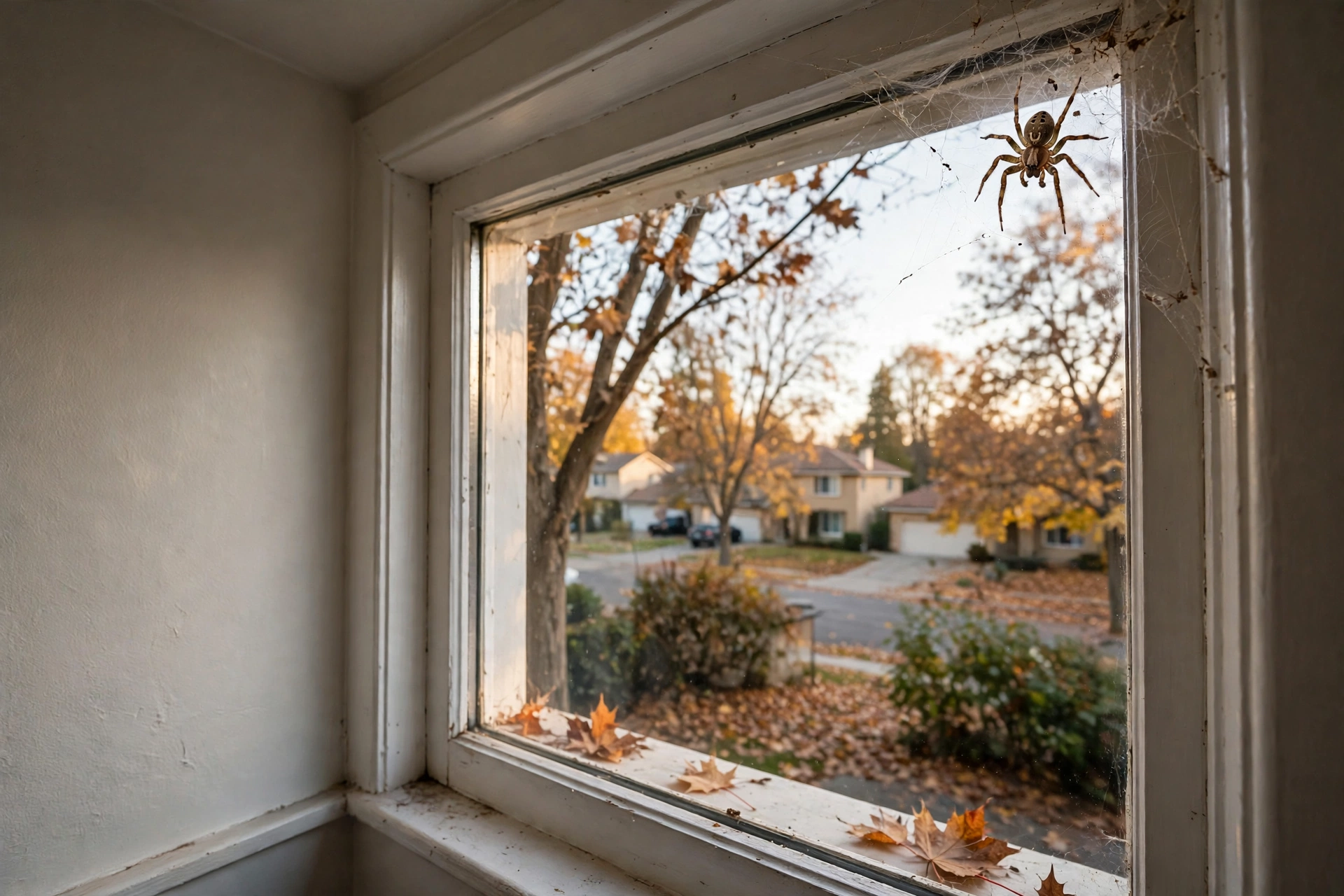
It usually starts small. A web appears in a window corner that was clear in August. Something big crosses the garage floor. A spider turns up in the bathtub, and suddenly it feels like they’re everywhere.
Most of the time, nothing has gone wrong — fall really is spider season here, and there are predictable reasons for it. But a few spider situations do deserve a closer look. Here’s how to tell the difference.
Why fall brings spiders indoors
It’s mating season. For many common spiders, late summer and fall is when males leave their hiding spots and wander in search of a mate. The big, visible spiders people notice in fall are usually males on the move — they were around all summer, just out of sight.
Their food moved in first. Spiders go where the insects are. In fall, other insects push indoors for shelter, and spiders follow the food supply — in through the same gaps, then set up near windows, doors, and lights where prey collects.
They’re looking for shelter too. Cooling nights send spiders toward dry, undisturbed places: garages, sheds, crawl spaces, woodpiles, and the quiet corners of the house.
The spiders you’ll actually see
Common house spiders build the webs in window corners, closets, and eaves. They’re shy, harmless, and quietly eating other insects while you ignore them.
Cellar spiders — the long, delicate ones in basements, garages, and crawl spaces — are also harmless. Their loose, messy webs catch a surprising number of other pests.
Wolf spiders are the big, fast ones that hunt on the ground instead of building webs. A wolf spider crossing the living room is startling, but it wants nothing to do with you, and it eats a lot of other bugs on its rounds.
Black widows are the exception. Widows prefer dark, undisturbed spots: woodpiles, sheds, garages, meter boxes, under eaves. They’re glossy black, with a red hourglass marking on the underside. Widows are shy, and bites are uncommon — they happen mostly when a spider is trapped against skin, like inside a stored glove. A widow bite is usually not life-threatening, but it does warrant medical attention, especially for children, older adults, and anyone with other health conditions.
And the brown recluse? It isn’t here. Despite what circulates online, brown recluse spiders are not established in California. Nearly every “recluse bite” reported in Sacramento turns out to be something else entirely.
What’s normal — and what isn’t
Plenty of fall spider activity is just the season doing its thing:
- Fresh webs in window corners, eaves, and door frames
- An occasional spider indoors, especially a wandering male
- Spiders concentrated in the garage, basement, or crawl space
- A few egg sacs tucked into quiet corners
These are worth a second look instead:
- Dozens of spiders. Spiders are predators — a crowd of them means a crowd of prey. Lots of spiders usually points to another insect problem feeding them.
- Spiders in living areas every day. Occasional is normal; daily appearances in bedrooms and bathrooms mean they’ve settled in, not passed through.
- Widow webs where hands go. Low, irregular webs near door handles, in stored gloves and shoes, or around play equipment deserve prompt attention.
- Bites you can’t explain. Repeated unexplained bites are a reason to talk to your doctor and get the house looked at — though more often than people expect, spiders aren’t the culprit.
How to keep the numbers down
Vacuum the corners. Regular vacuuming along baseboards, window frames, and behind furniture removes webs and egg sacs before they hatch out. This alone cuts indoor numbers noticeably.
Declutter the edges. Boxes and storage piled against garage and basement walls are prime spider habitat. The less undisturbed clutter, the fewer places to hide.
Seal the entry points. Door sweeps, intact window screens, and caulk around pipes and utility lines close the same gaps every other pest uses.
Turn down the welcome light. Porch lights draw flying insects, and the insects draw spiders to your doors and windows. Moving lights away from entry points, or switching to warmer bulbs that insects find less attractive, helps break the chain.
Move the woodpile. Firewood stacked against the house is widow habitat with a roof. Store it away from the walls, and bring in only what you’ll burn that day.
When to call a professional
If spiders keep coming back after cleaning and sealing, if you’re finding widows around the house, or if you’ve got a spider you simply can’t identify, an inspection is worth it. A recurring spider presence usually means a prey problem underneath it — and reducing the insects spiders feed on is what actually brings spider numbers down for good. That’s the thinking behind our residential pest control service: treat the food source, not just the spiders you can see.
Pest Control Center has been serving Sacramento and El Dorado County since 1986, and we’ll tell you honestly whether what you’re seeing is a normal fall surge or something that actually needs treatment.
Seeing more spiders than feels normal? Call our Sacramento office at (916) 344-4400 or our El Dorado office at (530) 622-4810 to schedule an inspection.
FAQ
Are house spiders dangerous?
The common ones — house spiders, cellar spiders, and wolf spiders — are not considered medically dangerous. They’re shy and bite only if handled or trapped against skin. The black widow is the local exception: bites are uncommon and usually not life-threatening, but they should get medical attention.
Why am I suddenly seeing so many spiders?
Fall is mating season for many species, so males are out wandering where you can see them. At the same time, the insects spiders eat are moving indoors, and spiders follow the food. A sudden surge usually means both are happening at once.
Should I leave some spiders alone?
Honestly, yes. A spider working a garage corner or basement is free pest control, eating insects you’d like even less. Most people draw the line at bedrooms and living areas — and that’s a reasonable line to draw.
How do I keep spiders out of bedrooms?
Vacuum corners, baseboards, and under furniture regularly to remove webs and egg sacs. Keep clutter off the floor, check window screens and door sweeps for gaps, and shake out stored blankets or seasonal clothing before use. If spiders keep showing up anyway, there’s likely an insect food source worth finding.