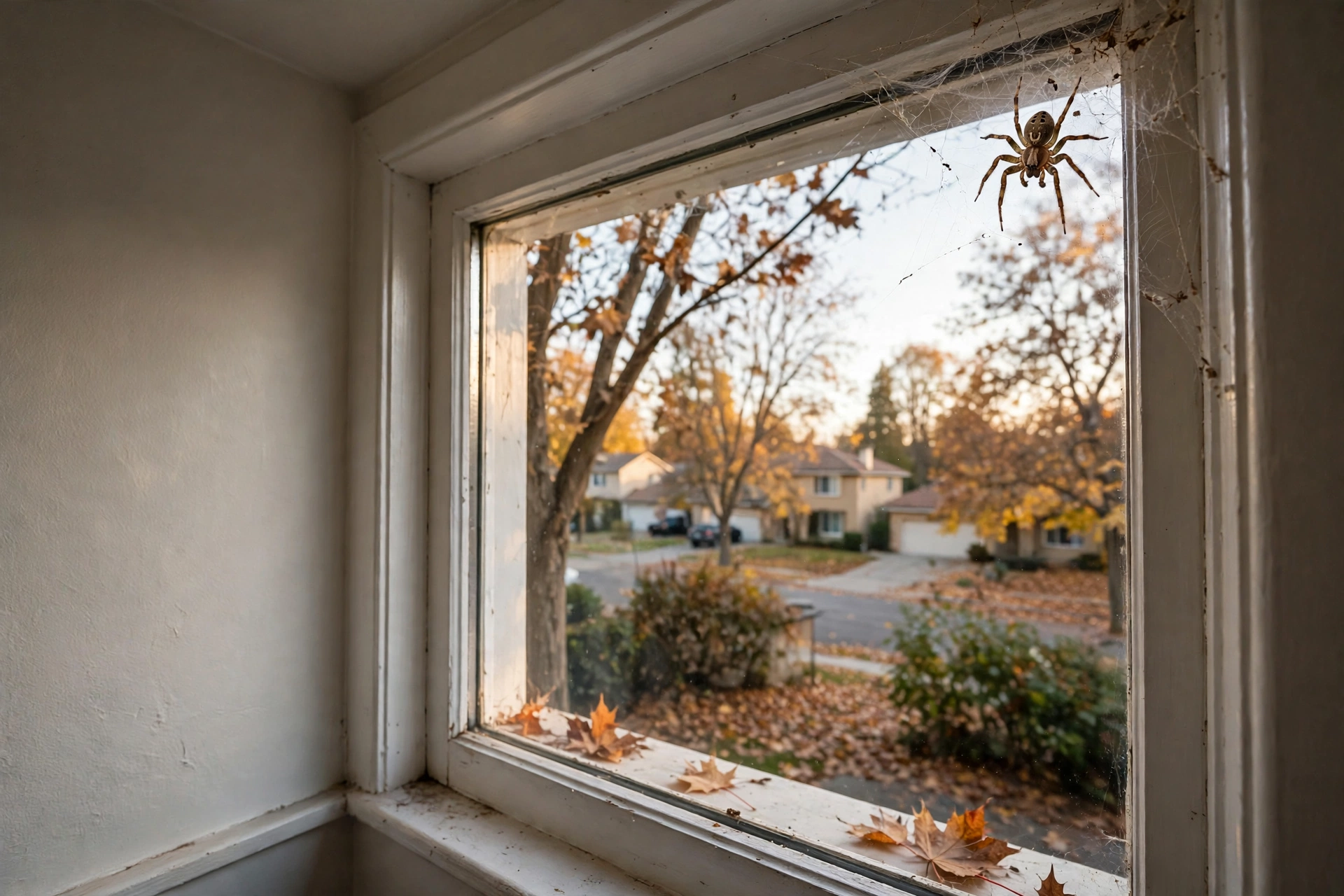
November is the last easy month. The days are still dry enough to work outside, the ladder work is still comfortable, and most rodents are still scouting — not settled. Once winter weather arrives in the Sacramento area, whatever gaps your house has become the doors pests use for the season.
This isn’t only about rodents. The same openings that let a mouse in also admit spiders, cockroaches, and other insects looking for shelter. Seal the gaps now and you close the door to all of them at once. Here are the seven entry points our rodent control in Sacramento team checks first, and how to close each one.
The 7 entry points to seal
1. Roofline, eaves, and soffit gaps. Check where the roof meets the walls, especially at eaves and soffits, and where two roof planes come together. Look for daylight, warped boards, and gaps around vents. Roof rats travel along the roof, so this is their front door. Seal gaps with metal flashing or hardware cloth secured with screws — not foam or caulk alone, which rodents chew through.
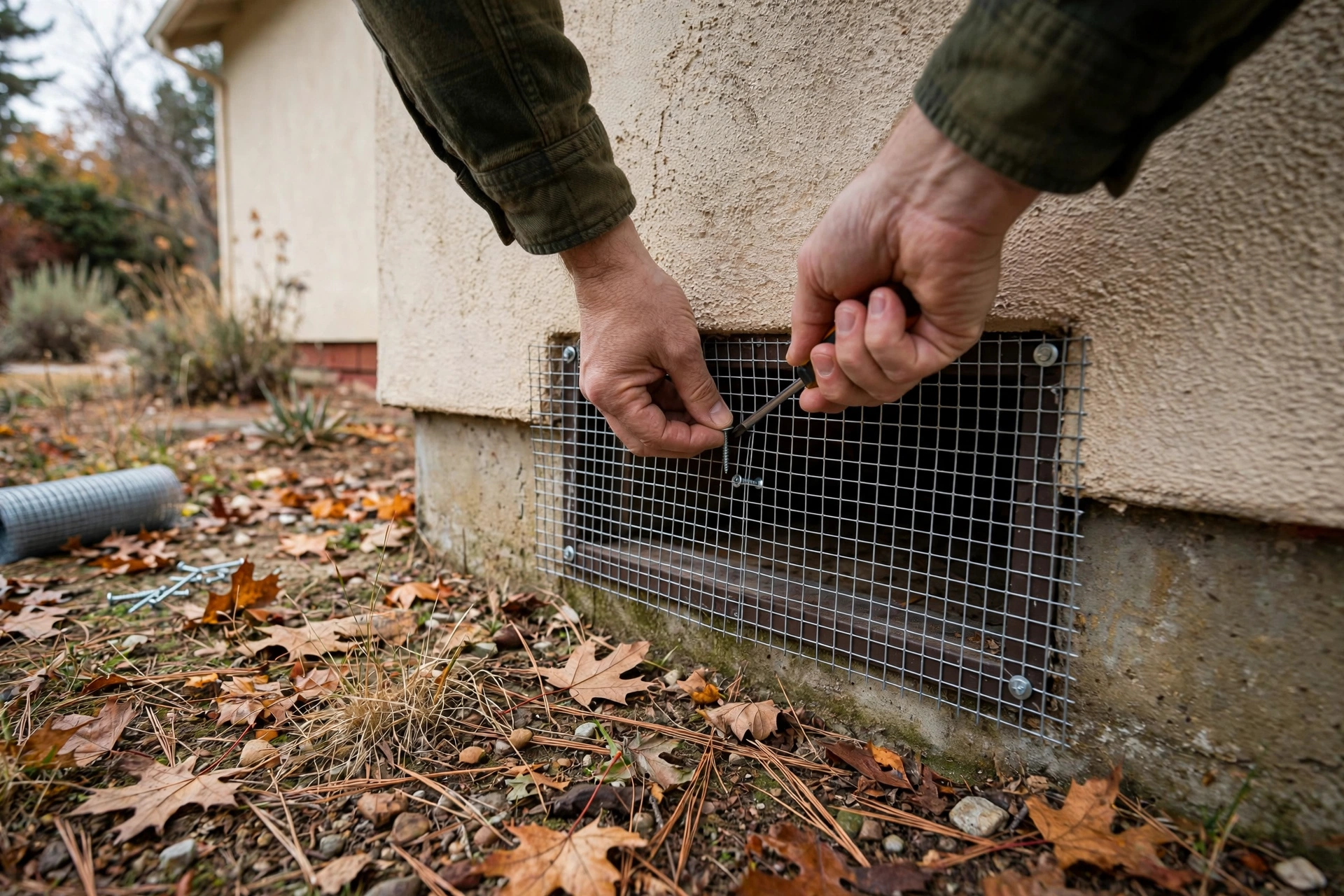
2. Attic and crawl space vent screens. Screens keep pests out only while they’re intact. Walk the foundation and look up at attic vents: torn, rusted, or missing mesh is an open invitation. Replace damaged screens with 1/4-inch hardware cloth, which is fine enough to stop mice and strong enough that they can’t push through it. Make sure crawl space access doors close and latch fully.
3. Gaps where pipes and utility lines enter. Every pipe, cable, and refrigerant line that passes through an exterior wall leaves a hole slightly bigger than the line itself. Check around hose bibs, AC lines, gas lines, and cable entries. Pack the gap tightly with copper mesh or steel wool, then seal over it with caulk — the metal is what stops the gnawing; the caulk just weatherproofs it.
4. Garage door seals and corners. Garages are the most common first stop — shelter, stored food, and a door that rarely seals perfectly. Check the bottom seal for cracks and gaps, and look at the corners, where daylight often shows even when the middle seals tight. Replace a worn bottom seal, and fit corner gaps with metal-reinforced seals rodents can’t chew through.
5. Door sweeps and weatherstripping. Run your hand along the bottom of exterior doors on a cold evening — if you feel air, a mouse can use that gap. A mouse fits through an opening the width of a pencil, so even a tidy-looking threshold can be an entrance. Install or replace door sweeps so they contact the threshold along the full width, and renew cracked weatherstripping around the frame.
6. Chimney cap and damper. An uncapped chimney is a straight shaft into your home, and birds, rodents, and insects all find it. If your chimney has no cap, or the cap is damaged or rusted, have a proper cap fitted — it keeps pests and rain out while letting smoke escape. When the fireplace isn’t in use, keep the damper closed; an open damper is an open door.
7. Branches and firewood against the house. Two things outside the house undo good sealing. Tree branches that touch or overhang the roof give roof rats a direct highway in — trim them back so nothing overhangs the roofline. And firewood stacked against an exterior wall is shelter pressed right up against your siding; move the stack away from the house and keep it off the ground.
A note on materials
Materials matter more than effort here. Rodents gnaw, and soft fillers don’t slow them down. Expanding foam on its own is the most common failed fix we see — rats and mice chew straight through it. Use it, if at all, only to weather-seal over metal. What works: copper mesh or steel wool packed tight and sealed with caulk, 1/4-inch hardware cloth for vents and larger openings, and metal flashing where boards meet. Remember the sizes: a mouse needs a gap the width of a pencil; a rat needs about half an inch. If a gap looks too small to bother with, check it anyway — the small ones count.
What a professional inspection adds
A homeowner with a ladder can handle most of this list. What you can’t easily get is the whole picture at once: the roofline from above, the attic from inside, and the crawl space below, checked in a single pass with an eye for the gaps that don’t look like gaps. That’s what a professional inspection adds — the entry points identified, a diagram of the findings, and an itemized plan before any work begins.
Pest Control Center has been doing this work in Northern California since 1986. Our rodent control services start with that complete inspection, then exclusion and repair, then trapping with follow-up visits, then ongoing monitoring — because sealing works best when someone checks the whole house, not just the spot where you heard scratching.
Want a second set of eyes on your home before winter? Call our Sacramento office at (916) 344-4400 or our El Dorado office at (530) 622-4810 to schedule a rodent inspection.
FAQ
When is the best time to seal entry points?
Late fall — November, before winter weather sets in and before rodents settle indoors for the season. Caulk also cures better in mild weather, and you’re not working around storms. Sealing helps at any time of year, but November is when it’s easiest and does the most good.
Can I just use expanding foam?
On its own, no. Rodents chew through cured foam easily — it’s a weather seal, not a barrier. Pack the gap with copper mesh or steel wool first, then foam or caulk over the top to weatherproof it. The metal does the stopping.
How small a gap actually matters?
Smaller than you’d think. A mouse fits through a gap the width of a pencil, and a rat needs only about half an inch. If a pencil slides into a crack, treat it as an entry point.
Does sealing help with spiders and insects too, or just rodents?
Both. Spiders, cockroaches, and other insects use many of the same gaps — around pipes, under doors, through damaged vent screens. Sealing won’t stop every insect, since some ride in on firewood, groceries, and open doors, but it removes the permanent highways they rely on.